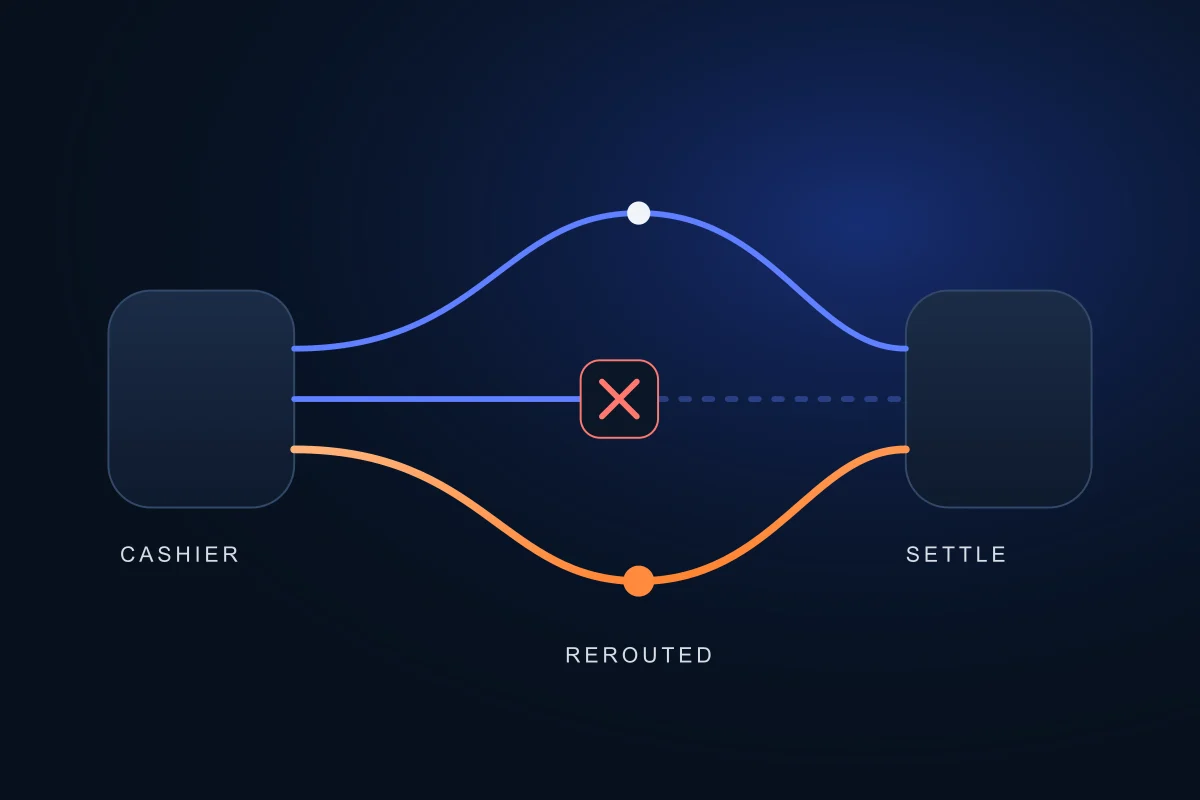
Connectivity is only one prerequisite. The merchant, activity and territories still need acceptance by the relevant providers.
Identify the merchant and settlement chain
For each method, name the contracting PSP or acquirer, merchant account holder, settlement recipient and currency. Record approval conditions, processing and payout scope, limits and the treatment of reserves or disputes.
A local-method logo does not prove that the method is available for the proposed gambling activity. Confirm the arrangement for your entity and markets before announcing it or basing the launch plan on it.
Define when routing and retrying are permitted
Routing chooses an eligible destination for a payment. Retrying an unsuccessful attempt needs a defined reason and must follow the applicable provider and scheme instructions. A timeout is especially important: the payment may have completed even when the response did not arrive.
Agree how the gateway establishes the original transaction state before another attempt. A route change should not create a second charge or turn a prohibited retry into an accepted operating practice. Keep the decision and provider references available for reconciliation.
Compare approval changes with fee changes correctly
A lower fee changes the cost of processed volume. A higher approval rate changes how many eligible attempts complete; it does not directly measure revenue or profit.
For illustration, a one-percentage-point fee reduction on €1,000,000 of settled volume saves €10,000 before other charges. A one-percentage-point improvement in value-weighted approval on €1,000,000 of eligible attempted value adds €10,000 of completed deposits, assuming the same denominator and transaction mix. Those deposits are not €10,000 of GGR or profit.
Use consistent definitions for attempts, retries, completed payments and observation periods. Review the effect on disputes, refunds and total cost before attributing an improvement to a routing change.
Put reserve cash in the funding plan
Suppose a hypothetical contract withholds 10% of €500,000 monthly processed volume for six months. It withholds €50,000 each month. Before releases begin, €300,000 accumulates. At constant volume, monthly releases of €50,000 can then offset new withholding, leaving that amount tied up while the arrangement continues.
This example assumes regular releases, no additional deductions and an unchanged contract. Growth, disputes or a changed hold period alter the result. Request the actual calculation base, release schedule and termination conditions. A reserve is different from a non-refundable fee, but both affect the cash available to the business.
Test the full payment record
| Scenario | What must reconcile |
|---|---|
| Successful deposit | Cashier result, provider reference and player credit |
| Uncertain response | Verified provider status and a controlled retry or recovery decision |
| Duplicate notification | One intended financial effect with an inspectable event history |
| Refund or dispute | Original transaction, adjustment and settlement impact |
| Withdrawal exception | Approval, provider state, player message and remaining obligation |
Specify monitoring and escalation using the rules applicable to the actual merchant and provider. Card-scheme thresholds and processor requirements can change; a general percentage on a sales page is not the operating agreement.
Scope integration and data handling
Choose hosted checkout or a custom cashier by the required experience and data flow. Establish which systems handle payment data and the security and PCI responsibilities that follow from that design. A hosted component does not automatically eliminate every responsibility of the operator.
Send your entities, markets, methods and current processors. Include settlement currencies, transaction profiles and the reconciliation problem you need to solve. For a crypto-led cashier, also define the balance and custody model.